The PlayStation 2 was a monolith of ambition, but its heart was a mere 32 megabytes of RAM. In the early 2000s, it was a cage. Every car, every raindrop, and every NPC shout had to fight for a few kilobytes of digital dirt.
Obbe Vermeij's entry into the world of professional game development carries the hazy, charmed energy of mid-90s serendipity. A Dutch physics graduate recently untethered from mandatory military service, he wasn't so much hunting a career as drifting toward one—until a single, glossy issue of Edge Magazine changed his trajectory.
In the early 1990s, while navigating the halls of the Technical University of Delft, Vermeij was already building for the Amiga. Wrangling Assembly language—a punishingly granular way to communicate with silicon—he had spent his student years crafting digital curiosities. There was The Shepherd, a pastoral "god-game" where players guided flocks across pixelated vistas, and Gravity Force 2, a gravity-bound shooter that found a second life in the "Coverdisks" of magazines like Amiga Format.
By 1994, degree in hand, Vermeij found himself at a loose end. Across the North Sea, the British games industry was vibrating with chaotic, gold-rush energy. Edge—then the industry's high-gloss arbiter of cool—was thick with recruitment ads from studios that felt more like pirate ships than corporations. DMA Design, fueled by the global phenomenon of Lemmings, was flush with cash and expanding with reckless ambition. They had five projects in flight but a deficit of the technical minds required to build them. Vermeij reached out to several British developers and, in 1995, packed his life for a role at DMA's outpost in Dundee, Scotland.
His fluency in low-level Assembly programming was an immediate asset in an era when consoles were stubborn boxes that had to be coaxed into performance. Before he would touch the project that defined a generation, Vermeij was assigned to Space Station Silicon Valley, a surrealist Nintendo 64 platformer. He joined a skeleton crew of what would become Rockstar's old guard, including producer Leslie Benzies and artist Aaron Garbut. While the game remained a cult curiosity rather than a commercial juggernaut, its technical foundations were sophisticated; Vermeij pioneered a system for inverse kinematics, essentially teaching digital creatures how to "feel" the ground beneath them.
What began as an accidental pivot from physics and hobbyist tinkering became the foundation for one of the industry's most influential technical directors. Vermeij would remain at the heart of the studio (later Rockstar North) until 2009, his work present in every gear and piston of the 3D Grand Theft Auto era. In retrospect, his journey reflects a vanished version of the industry—one that rewarded raw talent, timing, and a willingness to relocate to a rainy corner of Scotland.
TakuhatsuMay 14, 2026
How did GTA III get started? Was there any doubt that a fully 3D version was realistically possible?
Obbe VermeijMay 14, 2026
Leslie Benzies and Aaron Garbut took the step to go 3D with GTA. There was no doubt the 3D part was possible. It was more memory/streaming considerations. It's a little known fact that the original GTA 1 & 2 team went on to work on GTA 2.5. It was called 2.5 because it was isometric (2.5 dimensional). I guess they weren't confident going full 3D. I've never seen this game and it could have been cancelled during the big reorganization. (It was set in Miami.)
TakuhatsuMay 14, 2026
Did GTA III feel like a sequel—or more like starting from scratch?
Obbe VermeijMay 14, 2026
It didn't feel like a sequel. GTA 2 had failed and the franchise had lost steam. The step from 2D to 3D was a big one and we decided to re-write the entire code base with an entirely new team. Even though the design of GTA III was largely based on GTA 1; it felt like a new game.
We were forward thinking. It was more important to make a good game in its own right rather than preserving the spirit of the original games. For the city, the artists took inspiration from the look and feel of GTA 1 but this could easily have been different.
TakuhatsuMay 14, 2026
In the early days at Rockstar North, did you have a strict rulebook for your code, or did everyone just code in their own style? How did you keep the codebase manageable if everyone was doing things differently?
Obbe VermeijMay 14, 2026
We never had any rules. People kinda followed their own style. Typically, me or Adam [Fowler] would ask people to do things differently, but only if they were problematic. Sometimes people used excessive macros or non-descriptive variable names.
TakuhatsuMay 14, 2026
Having been released decades ago, GTA III is now seen as a revolution in the gaming industry; what did it feel like while you were working on it?
Obbe VermeijMay 14, 2026
We felt everything we did was 8/10 quality. Pretty good but not exceptional. So no, it did not feel like we were working on something revolutionary from the start.
TakuhatsuMay 14, 2026
When did you realize you had something special?
Obbe VermeijMay 14, 2026
Creatively, I would say it was five months or so before release. The music went in. The crashes were fixed. The frame rate was getting decent. That's when we all realized we had made something a bit different. Commercially, it was maybe three months after release.
After GTA 2, the franchise had indeed suffered. But the marketing Sony and R* did created a fair amount of buzz around the launch of GTA III. The game had great reviews and sold according to expectations initially. It was just that it didn't seem to taper off. It just kept going. It was a different world then and news traveled slower.
TakuhatsuMay 14, 2026
What was the mood inside the studio during those final months?
Obbe VermeijMay 14, 2026
Six months before release, there was a real buzz around the company. Everybody was enjoying work and working together to make the best possible game. Even during crunch time, most people worked no more than ten hours a day and during the weekend the office was usually empty. There was a chef making dinner for people working late. People from work would often socialize together—often going drinking on Fridays or meeting up in the pub to watch football.
Even at the height of crunch time I think a work week for me was somewhere around 50 hours. We never did the crazy hours other companies were known for at the time.
The key to programming is concentration and it is very difficult for people to concentrate more than eight hours a day. I think it is more important for people to be focussed on work when they are in the office, rather than spending more time in the office.
TakuhatsuMay 14, 2026
Touching on that, what makes programming exciting for you?
Obbe VermeijMay 14, 2026
The most exciting thing in programming is when something cool happens and players don't even think about it. For instance, people expect a car to get damaged when it collides; when that happens without breaking immersion, that's when the magic happens.
TakuhatsuMay 14, 2026
How was the leadership structured during the programming of GTA III—was there a clear hierarchy, or was everyone just figuring things out as they went?
Obbe VermeijMay 14, 2026
Adam Fowler—the other technical director on GTA III—and I were spending 95% of our time coding. It felt like we were leading by example. Actually, it felt like the team was so small and focussed that a separate layer of leadership wasn't really needed.
TakuhatsuMay 14, 2026
The PlayStation 2 had just 32 megabytes of RAM. Thinking back, if you'd had just one more, what would you have done with it?
Obbe VermeijMay 14, 2026
Yes, it was very tight. Adam Fowler managed the memory. We immediately would have increased the streaming budget with that extra Meg. Maybe an extra car model in memory, two extra NPC models, and a bit more breathing room for the map streaming.
TakuhatsuMay 14, 2026
To what extent was Liberty City's look a creative choice—and how much of it was actually dictated by technical limits?
Obbe VermeijMay 14, 2026
It was more the memory/streaming limitations. Had we been able to load models from the DVD more quickly, we could have had higher-resolution textures.
Adam had developed some tools to find textures that were used unnecessarily—textures that were in an overall bank as opposed to an area-specific bank, for instance. We started without streaming; the artists tried to texture the whole map with a limited texture budget. When streaming was introduced, they were able to do a lot more. Other games at the time, like The Getaway, took the opposite approach: start big and then try to cut it down to fit. I think our approach worked better.
From Obbe's Threads post on October 10, 2024.
obbeverm2024/10/10
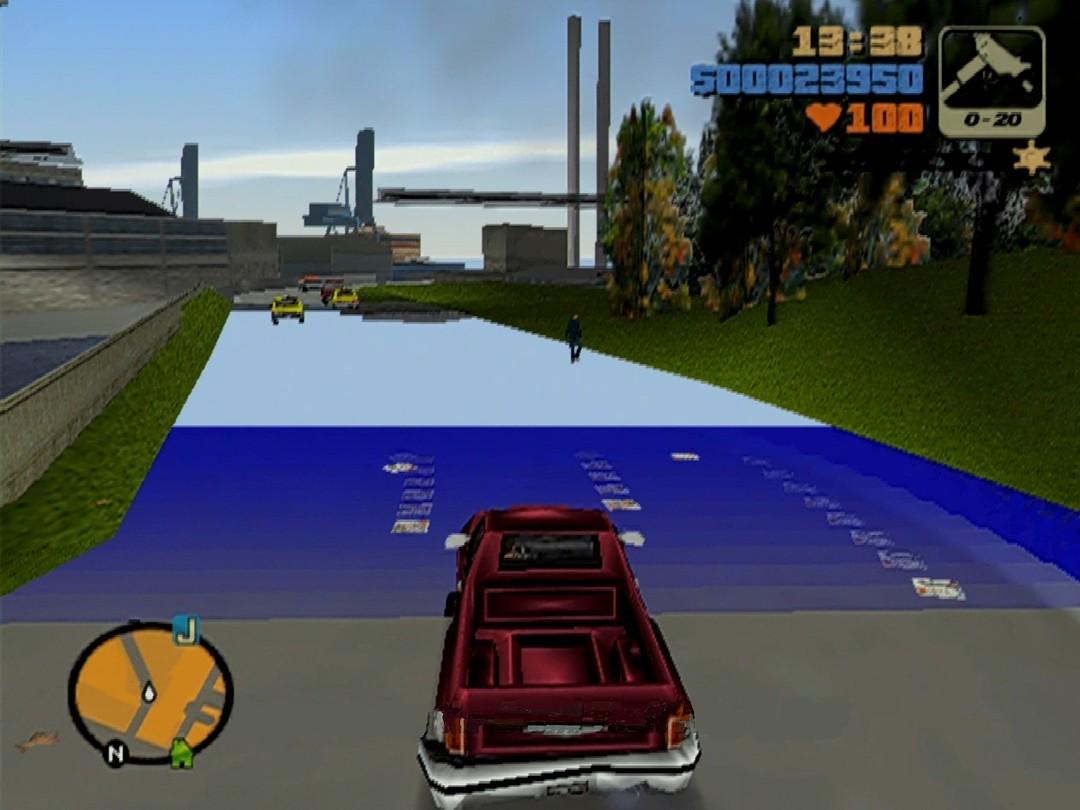
There was no way we could fit the whole map of gta3 in PS2 memory. Streaming involves loading models from the DVD as the player moves around. This was the hardest technical challenge during the development of gta3 and was coded by Adam Fowler.
The closer models physically are on the DVD, the faster they are loaded. This is because the DVD needs to accelerate/decelerate as the head moves to a different track.
obbeverm2024/10/10
Adam tried to place models that were close together in the city also close together on the DVD. He also experimented with repeating commonly used files.
Even after placing models on the DVD efficiently, it was still not fast enough. Players would see the low detailed version of buildings and sometimes the road was missing.
At some point we couldn't speed the streaming up any further. We had no option but to slow the player down.
obbeverm2024/10/10
Portland initially had a big drag running all along the island. This was a worst case scenario. The player could go fast and there were loads of buildings to load. The artists changed the road layout to slow the player down.
In other problem areas, we increased the drag (air resistance) on the vehicles 5% or so. Hardly noticeable but it helped.
The streaming issues were the main reason we couldn't let the player fly in gta3 (other than with the dodo)
obbeverm2024/10/10
Streaming was also used for vehicle models, npc models and music but the map posed the greatest difficulty because of the amount of data.
As models got loaded into memory and then removed, the memory would fragment into smaller and smaller blocks. Adam's code constantly moved models around to fix this. This was tricky as models sometimes had to be moved while they could be rendered.
obbeverm2024/10/10
For Vice City, various code improvements were made. Better compression of models and textures. Smarter code that would load the detailed versions of buildings only if the player was not flying.
Streaming issues tends to get worse with older DVDs and older PS2s.
Streaming
TakuhatsuMay 14, 2026
Why RenderWare?
Obbe VermeijMay 14, 2026
We needed a low-level engine that rendered models and didn't do much else. Unreal was around, but it was geared towards first-person shooters and too heavy for our liking. To be honest, I can't remember too much about making the choice—it was mostly Adam Fowler's domain—but RW was the logical choice at the time.
TakuhatsuMay 14, 2026
More than just a map, Liberty City feels alive in a way games hadn't really done before. Which subtle things are you most proud of?
Obbe VermeijMay 14, 2026
I love it when people say the city feels "lived in" without realizing it's because of all the little details we put in. Personally, I'm proud of the weather and clouds, the litter, the wet roads, skid marks, and the shadows on NPCs and cars. People don't notice them, but the city would be sterile without them.
TakuhatsuMay 14, 2026
By comparison to games like Silent Hill, which used fog to mask pop-in and limited draw distance, what was the actual purpose of the fog in GTA III—was it hiding something, or was it purely cosmetic?
Obbe VermeijMay 14, 2026
The fog was purely cosmetic. A particular scene had to be rendered during fog as well as on a clear day, so there was no advantage to pulling in the fog further other than the look. I coded the glow around lights to fade and grow in size during fog; that made a big difference. I think the narrow streets were also more of an esthetic and gameplay choice and not for speed. We didn't have any culling behind buildings until four weeks before the end, so making alleys narrower wouldn't have helped much for speed.
Apart from breaking up the long straight on the first island, I can't think of any other places. No, wait—I think a subway line was moved away from a busy area once.
TakuhatsuMay 14, 2026
The weather system in GTA III adds a lot to the atmosphere. Was it structured as a simple cycle, or something more dynamic?
Obbe VermeijMay 14, 2026
The weather is just a simple cycle. My first implementation used random transitions where every hour, a new weather type was picked at random. This resulted in many complaints because it could rain for long periods at a time—so I changed it.
TakuhatsuMay 14, 2026
Were there any weather ideas you had to cut because of hardware limits or time?
Obbe VermeijMay 14, 2026
There wasn't really anything weather-related that would have been impossible to do. Everything was balanced against implementation time. Snow would have been nice, but it would have been a lot of work.
TakuhatsuMay 14, 2026
You worked on the car AI—were you also behind those cops that go completely over the top the moment you accidentally bump into them at a red light?
Obbe VermeijMay 14, 2026
I did the AI for the cop cars. They're hilariously aggressive. It would have looked dumb in a more realistic game, but for GTA III, it was perfect.
TakuhatsuMay 14, 2026
While the cops were super aggressive toward the player, they totally ignored gang members shooting Uzis at anyone they wanted on the streets. As I remember—I was one of them—many players were questioning that behavior back then. Was that something you thought about during development?
Obbe VermeijMay 14, 2026
The cops on foot weren't really my responsibility, but it's clear that if the cops had engaged with the gang members, it would have been too easy for players to win the fight.
TakuhatsuMay 14, 2026
Were there features you knew players would assume were intentional design choices, even though they were actually technical survival tactics?
Obbe VermeijMay 14, 2026
It always made me smile when players thought our random number generator was broken. "Why is it that once I see this car, I see so many of them?" Players didn't realize we only had the memory to load eight models at any one time. Yes, there were many things like this. When on a train, you couldn't jump to the destination station because the streaming would take a long time.
TakuhatsuMay 14, 2026
With the city and story being so dynamic during development, how did you manage the technical fallout when mission locations or ‘contact points’ were shifted late in the game?
Obbe VermeijMay 14, 2026
The mission logic was handled by our own custom scripting language, which allowed level designers to move contact points around without much extra work on the code side. However, it was often annoying for the artists; they might spend weeks detailing a specific alleyway or corner for a mission, only to have the design team move the contact point to a different part of the city. Everything was very fluid during GTA III, and the whole team just had to adapt to those shifts on the fly.
TakuhatsuMay 14, 2026
Moving a mission contact point to a new location, did the original site ever get scaled back or simplified to save on resources?
Obbe VermeijMay 14, 2026
I don't think the map artists would go back and simplify the map. They would just leave it as it was.
TakuhatsuMay 14, 2026
How did you decide which bugs were worth fixing—and which ones you had to live with?
Obbe VermeijMay 14, 2026
With bugs it is a matter of fixing the most important ones until the time runs out. You assess each bug and sometimes they're not worth fixing. Bugs that you really can't explain make a programmer uneasy. You'd rather fix those rather than risking another unintended more serious problem. One bug I was aware of but didn't have time to fix properly were the crashing small planes in SA. It was messy but better than removing them altogether. There were more important things to fix. We aimed to fix all A and B bugs (crashes and getting stuck) and most of the C bugs (quite obvious ones) but there were plenty of D and E bugs that we knew about but didn't have time for.
TakuhatsuMay 14, 2026
During the development of GTA III, the move to a dual-stick controller changed how players navigated space. Did it reshape how you thought about controls, the camera—maybe even how cinematic the game could be?
Obbe VermeijMay 14, 2026
The separate stick to control the camera did add a lot of awareness to the player. It became much easier to scan the environment. That made it feel more fair when we sprung surprises on the player—maybe. It also allowed the camera to be closer in. Did that make it more cinematic? Probably.
TakuhatsuMay 14, 2026
Following the events of 9/11, several elements of the game—including specific missions and character dialogue—were altered or removed. Could you describe the atmosphere at R*North when those events occurred?
Obbe VermeijMay 14, 2026
The changes I remember were the police cars. They were changed to be less like the police cars from actual NY. I had a little plane flying around that looked like it crashed into a building; I raised the path of it to avoid that visual. The mood in Edinburgh was one of shock—not really about the game but more the event itself. Of course, the guys in R*NY were much closer to it. As I remember, it wasn't entirely clear we were going to release the game at all for a week or so.
TakuhatsuMay 14, 2026
GTA Vice City significantly ‘jumped’ in performance and added new features—a bigger map, players could fly, bikes were introduced, and more gameplay systems—while still running on the same 32MB of PS2 memory. What was the main thing that made that possible?
Obbe VermeijMay 14, 2026
I wasn't really involved with this, but the compression for textures and models improved. The collision models in GTA III were loaded island-by-island (this is why we needed the screens when you transition between islands). For Vice they were streamed as well. This freed up some memory. Not really a revolution—just a list of small optimizations.
TakuhatsuMay 14, 2026
Daniel Vávra has said that Rockstar Games once considered publishing Mafia: The City of Lost Heaven. Do you know anything about that?
Daniel Vávra@DanielVavra • Nov 14, 2025
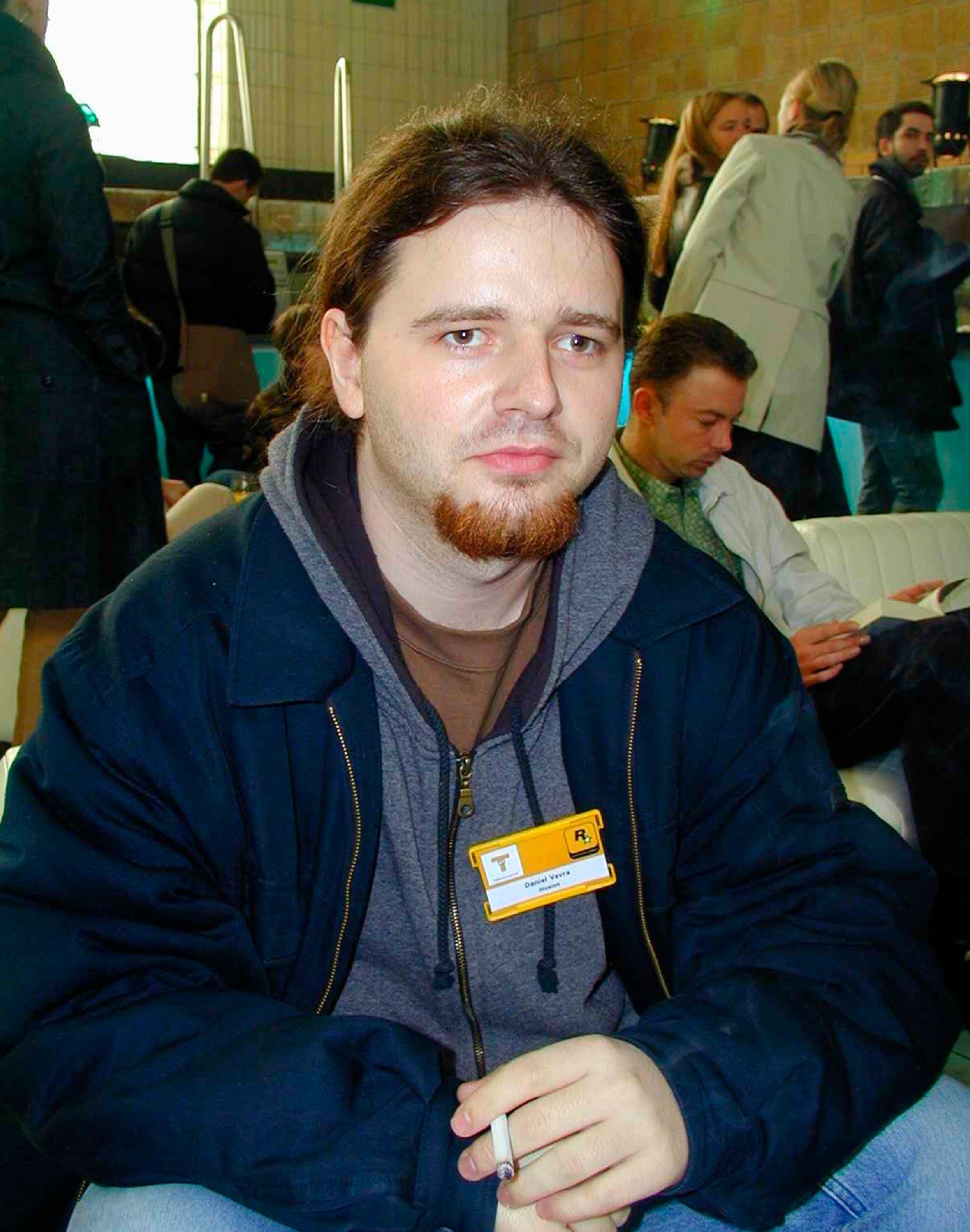
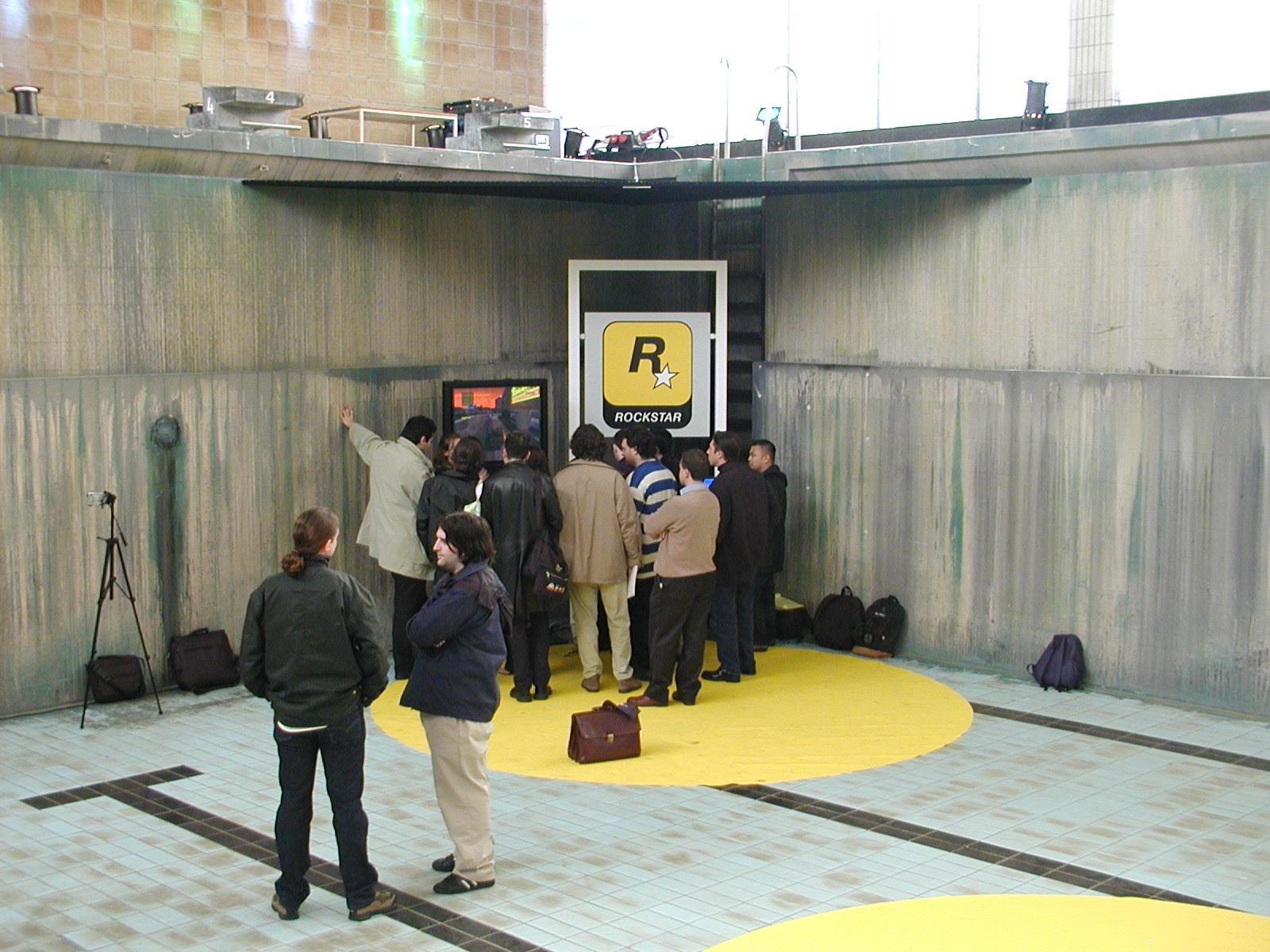
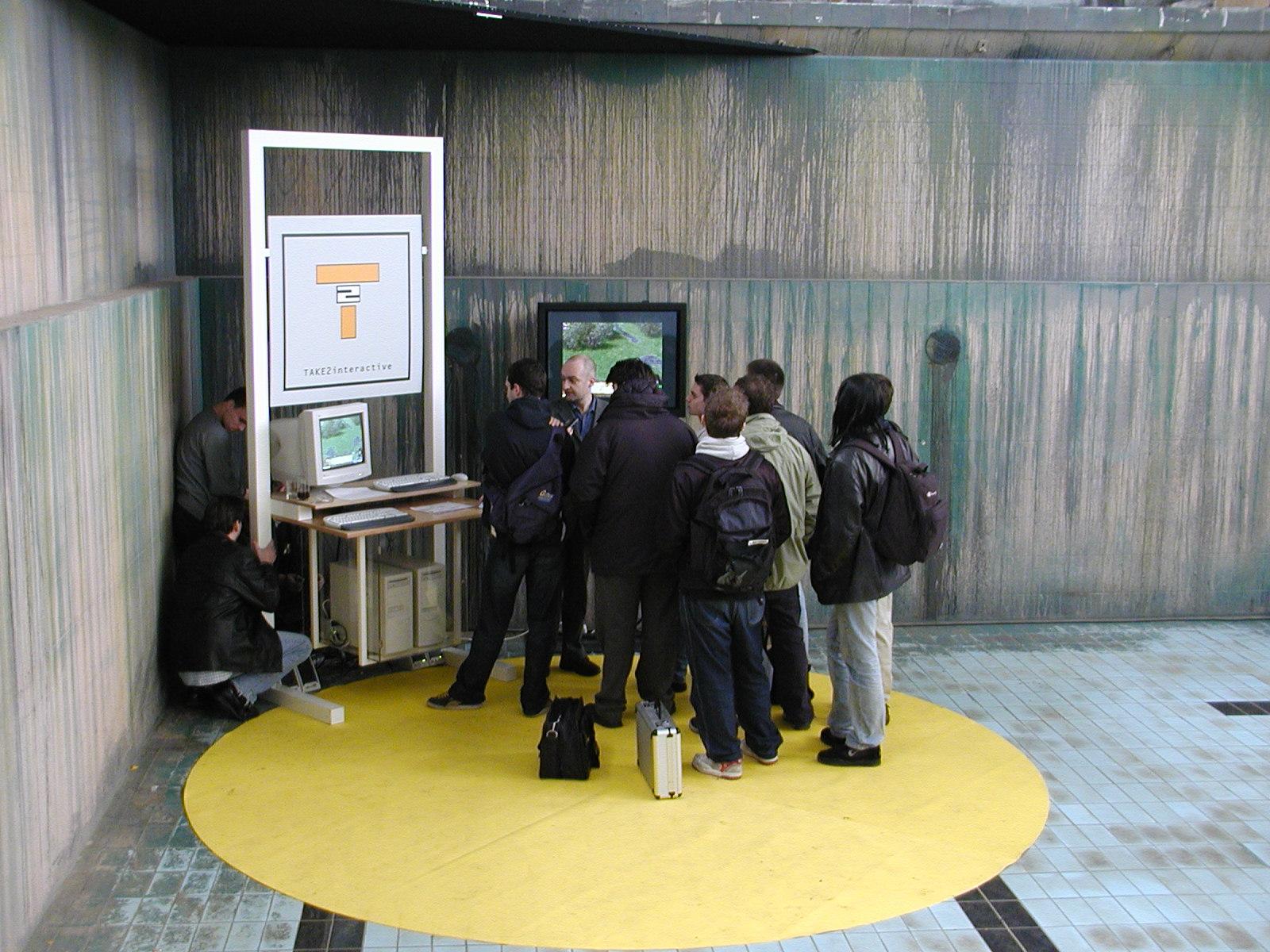
Not many people know, but Mafia and GTAIII were developed at the same time for the same publisher. We even had PR events together. Here is an event in Germany in a pool of some former military base in 2001. One corner GTA another Mafia. Rockstar managed to finish the game 10 months sooner than us, and they took the crown of OG most famous open world gangster game. I was in Rockstar New York office three months after they shipped the game to direct voiceovers. Oh my, they were bathing in fame :) (Yeah, that guy on the picture is me 24 years ago).
Obbe VermeijMay 14, 2026
We didn't have anything to do with Mafia. New York handled other games. We just focussed on GTA and Manhunt at the time. There was another Rockstar game called ‘State of Emergency’ that demoed at that E3. It actually got more interest than GTA III. Games with flashy graphics do well at shows, but that doesn't always translate to sales.
TakuhatsuMay 14, 2026
Looking at how Rockstar grew, you've mentioned it became harder to get personal ideas into the games once decisions were increasingly controlled from New York. Were there any specific features you really wanted in GTA IV that ultimately didn't make the cut?
Obbe VermeijMay 14, 2026
For the trilogy, we had meetings at R*N deciding on features we wanted to include. For IV, that wasn't the case. It wasn't just that NY made more decisions; it was also that games became more realistic and less goofy. There was just less scope for gameplay-driven ideas.
TakuhatsuMay 14, 2026
You've seen game development go from 5-person teams to 1,000-person machines. Being back in a small-scale environment with Plentiful, do you feel more like the person you were in the 90s than the person you were during GTA IV?
Obbe VermeijMay 14, 2026
Yes. I love games because of the gameplay experience and as the team grew I got further and further removed from that. During the trilogy everybody still had a chase to get their ideas in the game but for GTA IV the team was so big and most things were decided in NY. With Plentiful I love being able to add gameplay features by myself the day I think of them.
TakuhatsuMay 14, 2026
During your time at Rockstar, the studio grew into a very different organization—one of the most coveted places to work in the industry. Eventually you realized it was time to leave. Did you wrestle with that internal question of whether you were making the right decision for your future?
Obbe VermeijMay 14, 2026
It wasn't just work. My wife is from Canada and she wanted to go home. Our kids were born during GTA IV and we didn't want to move when they were older. We still considered staying for another game but all things considered there were more reasons to go than stay. I've never looked back. To make games takes a lot out of you and if you're not 100% into it, it is going to be a struggle. I thought at the start of IV that it would probably be my last game, but didn't make the final decision until after finishing it.
TakuhatsuMay 14, 2026
Regarding world-building, do you still use the old technical ‘cheats’ to create the illusion of life, or is the process entirely different now?
Obbe VermeijMay 14, 2026
Plentiful is all about shaping the world to suit your people. The people themselves have fairly basic behaviour. Not really much more advanced than a GTA III NPC. But yes, you can have more of them. It is really nice not to have to worry about optimizing that much. That gives me more time to implement gameplay features, little hidden mechanics and stuff.
TakuhatsuMay 14, 2026
When you see modern open-world games with effectively unlimited memory, do you ever feel nostalgia for the era when every decision had a visible cost?
Obbe VermeijMay 14, 2026
Yes. I do feel nostalgia. There was a real art to prioritizing and implementing features—a craft that is not needed that much today. You can see it in the teams. Programmers are less important now and storytellers & producers more. This is because technical limitations are less punishing. The games are better for it. It is Progress.
TakuhatsuMay 14, 2026
Do you think a game like GTA III could exist today—not technologically, but culturally—made by a small group of people improvising inside hard limits?
Obbe VermeijMay 14, 2026
There basically are no technical limits. You can make anything you can imagine. Having said that, I think there is a real demand for smaller games. Games that you can install and have fun with in minutes. Games that don't have a steep learning curve. That's why I love indie games so much. I can have fun for an hour and put it aside. An hour doesn't even get you past the tutorial in most AAA games.
TakuhatsuMay 14, 2026
Looking back at the 2000s, while working on GTA III, do you feel like you were building a city—or discovering one hidden inside the hardware?
Obbe VermeijMay 14, 2026
We were building a city and the hardware was trying to stop us.






 @DanielVavra • Nov 14, 2025